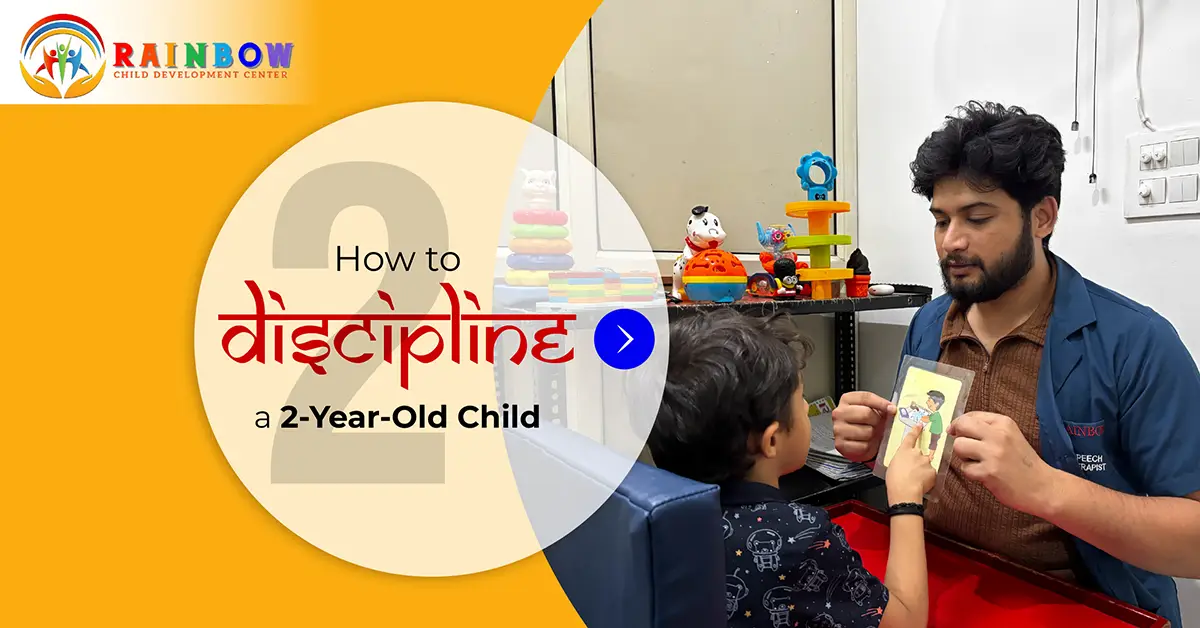
A two-year-old can be loving, curious, playful, and stubborn within the same five minutes. At this age, children are learning what they can do on their own, but they do not yet have the language or self-control to handle every feeling. That is why crying, refusing, throwing toys, hitting, or saying “no” can become part of daily life.
Learning How to Discipline a 2-Year-Old Child does not mean controlling every action. Good discipline teaches a child what is safe, what is not allowed, and what they can do instead. Rainbow Child Development Center encourages parents to look at a child’s age, communication skills, behaviour, and development when dealing with repeated difficulties.
How to Discipline a 2-Year-Old Child: Simple Rules That Work at Home
When parents look up how to discipline toddlers, they often find complicated advice. With a two-year-old, simple rules usually work better.
A child at this age cannot remember long explanations when they are angry or excited. Instead of giving a speech, use short directions such as, “Hands stay gentle,” “Food stays on the table,” or “Hold my hand near the road.”
Keep the same rule each time. If throwing a toy is not allowed today, it should not suddenly become acceptable tomorrow because the parent is tired.
Children learn through repetition. You may need to say and show the same thing many times before it becomes familiar.
Understand Normal Behaviour in a Two-Year-Old
A two year old is still learning how feelings work. They may know what they want but may not have enough words to explain it.
This can result in crying, screaming, throwing things or not following directions.
A year old child at this stage also wants independence. They may insist on putting on their own shoes, choosing their cup, or doing a task without help.
Giving small choices can prevent unnecessary arguments.
For example:
- “Do you want the blue cup or yellow cup?”
- “Would you like to walk or hold my hand?”
- “Do you want to put away the blocks or books first?”
- Both options should be acceptable to the parent.
Discipline a 2-Year-Old Without Shouting
Parents sometimes search for discipline 2 or discipline methods for age two because ordinary instructions seem to stop working.
- Shouting may get a child's attention for a moment, but it does not teach them what to do next.
- If your child throws a toy, calmly remove the toy and say, “Toys are for playing, not throwing.”
- If they hit another child, stop the action and say, “I won't let you hit. Hitting hurts.”
- Keep your words short. Your response should tell the child both the limit and the expected behaviour.
Ways to Control Children's Behaviour Without Being Too Strict
“Ways to control children” is a common search, but control should not be the main goal. A better goal is teaching children how to behave safely and gradually manage their own actions.
Start with a few clear household rules instead of correcting everything.
Notice good behaviour too. If your child puts a toy away, waits for a moment, or uses gentle hands, tell them exactly what they did well.
Instead of saying only “good boy” or “good girl,” say, “You put your toys back. Thank you.”
That helps the child understand which action you want them to repeat.
What to Do During Tantrums
Tantrums are common around age two. Hunger, tiredness, frustration, changes in routine, and difficulty communicating can all play a part.
Stay nearby and make sure your child is safe. Avoid giving long explanations in the middle of intense crying.
Once the child settles, use simple words to name what happened: “You were upset because playtime ended.”
Children who have frequent difficulties expressing needs may benefit from an assessment related to Speech Therapy or Language & Communication Therapy when communication concerns are also presen.
When Behaviour May Be Linked to Sensory Needs
Sometimes behaviour is not simply about refusing to listen.
A child may dislike loud sounds, certain clothes, messy hands, hair washing, crowded places, or particular food textures. If these reactions regularly affect daily activities, parents may want to discuss Occupational Therapy or Sensory Integration Therapy with a qualified professional.
The important point is to look at what happens before the behaviour.
Was the room noisy? Was your child tired? Did the routine change? Were they unable to tell you what was wrong?
The answer can change how you respond.
Teach Communication Along With Discipline
Many behaviour problems become harder when a toddler cannot clearly say what they need.
You can teach simple words such as “help,” “more,” “stop,” “mine,” or “finished.”
Children with speech concerns may require Speech Therapy after proper assessment. A child with specific speech sound difficulties may also need support for a Speech Sounds Disorder.
If oral movements or feeding skills are also a concern, a professional may consider whether Oral Placement Therapy is relevant.
Better communication does not remove every tantrum, but it can give children another way to express themselves.
When Does a Child Need Extra Behaviour Support?
Not every difficult behaviour requires therapy. Two-year-olds naturally test boundaries.
However, if the behavior is very frequent, causes injury, or interferes with sleep, eating, or normal family routines parents may want to seek professional advice.
Behavior Modification Therapy is a possible option when a child requires extra assistance in learning appropriate responses and routines.
Children with developmental differences may need different forms of support. Autism Spectrum Disorder services, for example, should focus on the individual child's communication, sensory, learning, and everyday needs.
ABA Therapy may also be part of a care plan for some children after assessment.
Other Child Development Services That May Be Relevant
Different concerns require different services.
- ADHD Therapy may be relevant for older children when attention, activity level, or impulse control causes ongoing difficulties and has been properly assessed.
- Dyslexia Therapy focuses on reading and learning difficulties rather than toddler discipline.
- Down Syndrome Therapy may cover communication, learning, movement, and daily skills according to the child's needs.
- Cerebral Palsy Therapy may include help with movement and everyday activities.
- A Physiotherapist can work with children who need support with balance, movement, strength, or mobility.
- Special Education may help children who need added support with learning.
- Play Group Therapy can give children opportunities to practise play and social interaction.
When emotional or behavioural concerns need closer attention, Psychological Assessment & Counseling can help families understand what may be affecting the child.
Keep Discipline Simple and Consistent
The best answer to How to Discipline a 2-Year-Old Child is rarely a strict punishment system. Toddlers need short rules, repetition, calm correction, choices, and plenty of chances to practise.
Rainbow Child Development Center can support families when behaviour appears alongside concerns about speech, sensory responses, learning, movement, or development.
A two-year-old will test limits. That is part of growing up. Your job is to make those limits clear, safe, and easy to understand.