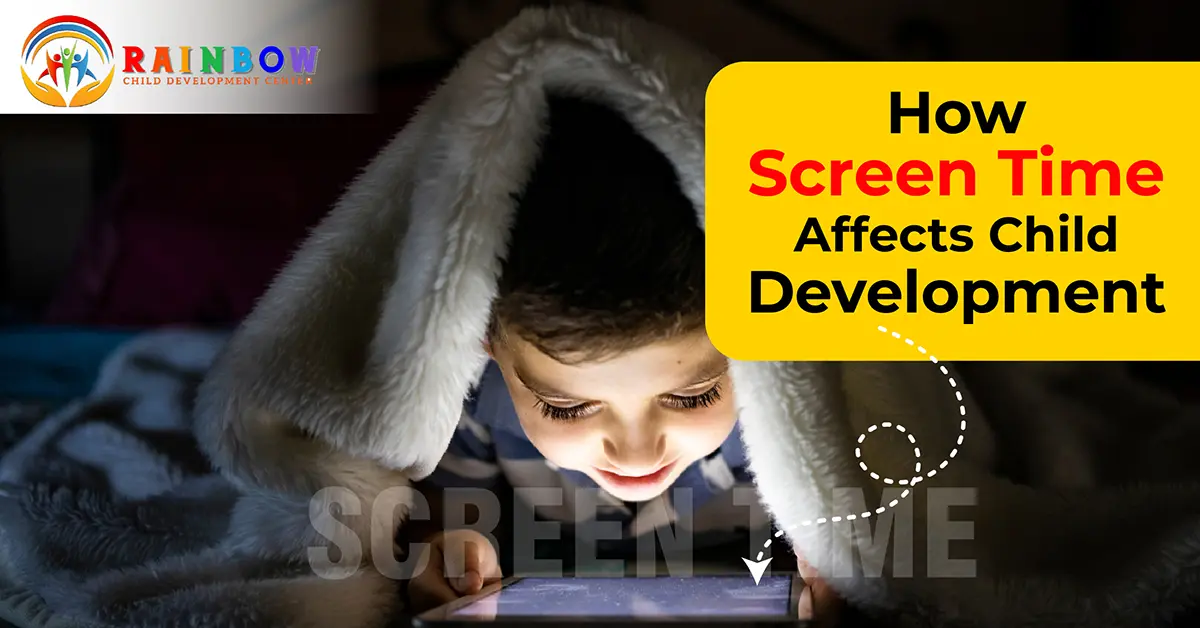
The screens are now an inevitable aspect of contemporary childhood. Be it through watching cartoons, taking online courses, playing games, or using educational applications, children today are more likely to be seen in front of the screen than any other generation did. As much as technology is a convenient and learning tool, most parents fear that screen time may influence the development of children and whether or not overuse of technology can affect the development of their child.
The point is that it does not necessarily mean that screen time is bad. The issues generally crop in as digital activities start to substitute the much needed childhood experience of physical play, socializing, reading, creativity, and sleeping. This knowledge about the positive and negative effects of screen exposure can make parents make better choices and establish healthier lifestyles with their children.
In this guide, we will discuss the impact of the screen time on the various aspects of child development and provide some practical tips on how to maintain a healthy balance.
Why Early Childhood Development Matters
The initial stages of development of brain of a child are critical during the early years of development. In this stage, children acquire knowledge at a fast rate via exploration, observation, movement and interaction with the individuals surrounding them. Each and every conversation, game, story and real world experience are sources of building future learning and behaviour.
Well-developed developmental skills are beneficial to children:
- Communicate effectively
- Build healthy relationships
- Solve problems independently
- Develop emotional resilience
- Perform better academically
Since these are the critical years, parents tend to be in panic about whether these screen hours are benefiting or posing a negative impact on the development of their child.
Understanding Screen Time in Today's World
Screen time is the time spent on using screens, i.e. television, smartphone, tablet, computer, and game console. Screen use is not all. To illustrate the point, a child attending an educational event with a parent can have vastly different experience as opposed to a child watching videos several hours by themselves.
Screen time can have an influence based on a few factors, including:
- The child's age
- The type of content being viewed
- How long screens are used
- Whether parents are involved
- The balance between screen use and other activities
Learning can be aided by the careful use of technology. Developmental problems can start to emerge when it takes control of the day to day life of a child.
How Screen Time Affects Brain Development
Active experience is the best way of learning by young children. Having the ability to touch objects, experiment, ask questions, and interact with the environment help them to develop cognitive abilities. These activities provide stimulation to the brain in a manner that box screen viewing can do little to copy.
To take an example, a toddler who stacks blocks by doing so, is learning about balance, shapes and problem solving by trial and error. Based on that, by helping a child make cookies, he or she learns about measurement, sequence and motor skills through the assistance of a caregiver.
Such rich learning experiences can be blocked by a surplus time on screens. With so much of the child daytime being devoted to digital content, exploration and practical activities that promote healthy brain growth may be lacking.
There could be concerns about overexposure to screens which include:
- Reduced opportunities for active learning
- Less engagement in imaginative play
- Lower levels of curiosity and exploration
- Limited real-world problem-solving experiences
This does not imply that screens need to be avoided. Instead, they ought to be used to supplement, rather than substituting meaningful learning opportunities.
How Screen Time Influences Sleep Quality
Sleep is an important aspect of child development. The brain works during sleep as it processes information, enhances memory and helps to regulate emotion. When children have sufficient rest on a regular basis, they tend to learn better, focus well and are able to control their emotions.
Unfortunately, screen time especially during the evening and when people are getting sleepy, can interfere with the normal sleep patterns. It can be harder to have breaks and sleep due to the exciting digital material that children are exposed to.
Typical sleep problems associated with too much screen time are:
- Difficulty falling asleep
- Delayed bedtimes
- Reduced sleep duration
- Poor sleep quality
- Increased daytime fatigue
A screen-free bedtime routine can be a great change to sleep-related patterns and well-being.
Effects on Social and Emotional Development
Instruction in the social skills deals directly with the children and others. Family discussions, playground activities, group games and friendships teach such valuable lessons as empathy, cooperation, communication and emotional regulation.
Your children may fail to develop these important life skills as they spend more and more time at the screen, replacing these interactions.
Through social experiences, the children are able to learn how to:
- Understand emotions
- Resolve conflicts
- Share and cooperate
- Build friendships
- Communicate effectively
When a child is exposed to peer interactions frequently, the child learns how to deal with conflicts, how to share or take turns, and get to know what other people think. These lessons cannot be easily reproduced by just consumption on the screen.
An appropriate balance of technology and in-person interactions will help with more robust emotional and social growth.
Does Screen Time Affect Academic Performance?
Proper use of technology is a resource that can be of great value on educating the people. Educational Videos, Interactive learning platforms, and digital tools can assist in learning and access to information.
But there are issues with a recreational screen use commencing to substitute productive activities like reading and studying, or accomplishing tasks.
Screen time can cause children to have problems with school learning when it results in:
- Reduced reading habits
- Poor study routines
- Difficulty concentrating on schoolwork
- Less interest in learning activities
A balanced approach would enable children to enjoy the learning technology and at the same time focusing on conventional experiences of learning.
Conclusion
In this era of technology, it is important to know the impact of screen time on the development of children. As much as screens can contribute to learning, communication and creativity, they can affect other vital areas like language development, attention, sleep and physical health as well as social skills.
Parents can help children learn, thrive, and succeed with technology by forming positive early habits.