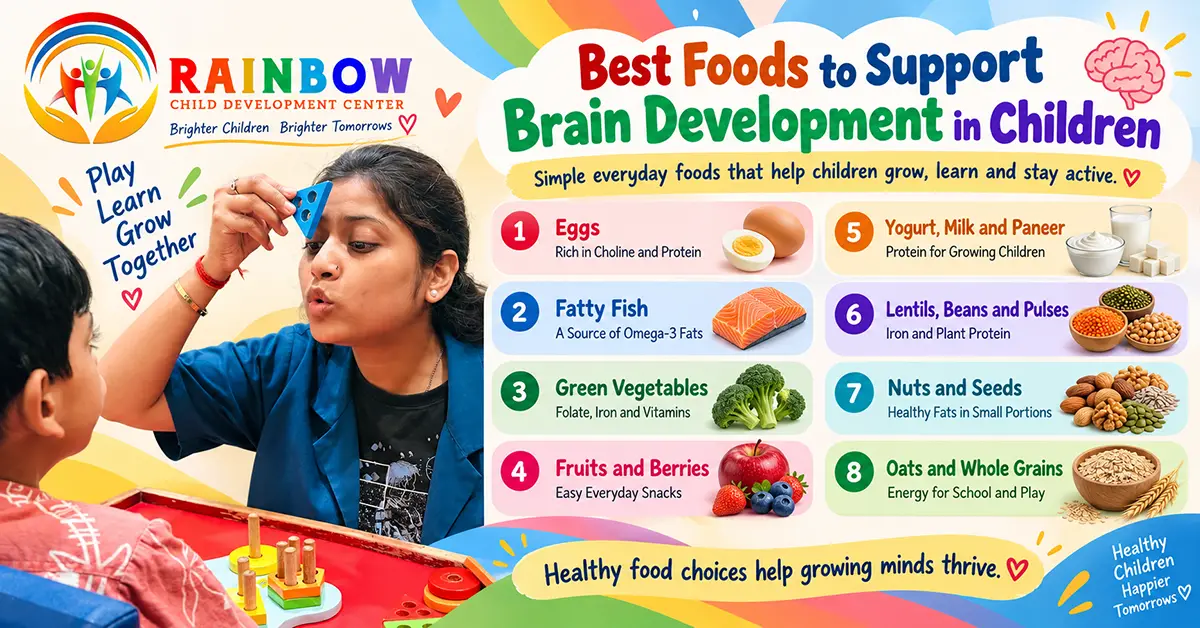
Food has a close link with a child’s growth, energy, learning, and daily activity. During the early years, the brain develops quickly and needs a steady supply of protein, healthy fats, iron, iodine, vitamins, and minerals. Parents often search for what to eat to support their child’s brain health, but there is no single food that can do everything.
A healthy plate should include different types of food such as eggs, vegetables, fruits, pulses, dairy products, whole grains, nuts, seeds, and suitable fish. The importance of healthy food is not limited to memory or studies. Good eating habits also support normal growth, physical activity, digestion, sleep and overall wellbeing. Simple home cooked food can be a good starting point for parents looking for healthy food for kids.
Best Foods to Support Brain Development in Children for Growth, Memory and Learning
The Best Foods to Support Brain Development in Children are foods that provide useful nutrients without making meals complicated. Instead of depending on packaged products marketed as a brain booster for kids, parents can build a balanced diet around familiar foods.
Here are some useful brain development food choices for children.
1. Eggs – Rich in Choline and Protein
Eggs contain protein, vitamin B12, and choline. Choline is needed for normal brain and nervous system function, which makes eggs a useful food during childhood.
Parents can serve boiled eggs, scrambled eggs, vegetable omelettes, or egg sandwiches. For toddlers, eggs should be cut into small, soft pieces that are easy to chew.
Eggs should form part of a balanced meal rather than being treated as a food that can suddenly improve intelligence or memory.
2. Fatty Fish – A Source of Omega-3 Fats
Fish such as salmon and sardines provide omega-3 fats, including DHA. DHA forms part of brain tissue and plays a role in normal brain development.
Parents can offer properly cooked boneless fish with rice, vegetables or other foods their child already enjoys. Choose fish that are low in mercury. Follow age-based recommendations when feeding young children seafood.
3. Green Vegetables – Folate, Iron and Vitamins
Spinach, broccoli, peas, beans, and other green vegetables provide folate, iron, and vitamins needed during childhood.
Children may refuse vegetables because of their taste, smell, or texture. Try adding them to parathas, khichdi, dal, sandwiches, soups, or omelettes instead of forcing large portions.
Some children have stronger reactions to food textures. If a child’s eating and other daily activities are affected by sensory difficulties, Sensory Integration Therapy can be considered after proper assessment. Children with oral-motor issues may be evaluated for Oral Placement Therapy.
4. Fruits and Berries – Easy Everyday Snacks
Bananas, apples, oranges, guava, papaya, strawberries, and blueberries provide vitamins, fibre, and plant nutrients.
Fresh fruit can be served with yogurt, oats, porridge, or as an after-school snack. Rotating fruits through the week gives children different tastes and nutrients while keeping meals interesting.
5. Yogurt, Milk and Paneer – Protein for Growing Children
Milk, plain yogurt, curd, and paneer provide protein and several nutrients needed for growth. Dairy foods can also provide iodine, which is important for normal brain development.
Simple options are yogurt with fruit, milk with breakfast or paneer sandwich. If a child has a milk allergy or another medical reason to avoid dairy, parents should follow the advice of their doctor or dietitian.
6. Lentils, Beans and Pulses – Iron and Plant Protein
Dal, chickpeas, kidney beans, peas, and other pulses are useful foods for children. They provide protein, fibre, iron, and folate.
Dal-rice, vegetable khichdi, chana, and soft-cooked beans can easily become part of regular family meals. Pairing iron-rich plant foods with vitamin C foods such as tomatoes, guava, oranges, or lemon can also help with iron absorption.
7. Nuts and Seeds – Healthy Fats in Small Portions
Walnuts, almonds, pumpkin seeds, chia seeds, and flaxseeds provide healthy fats, protein, vitamin E, and minerals.
For younger children, whole nuts can be a choking risk. Parents can use smooth nut butter or finely ground nuts when suitable for the child’s age.
8. Oats and Whole Grains – Energy for School and Play
Oats, whole-wheat roti, brown rice, and other whole grains provide carbohydrates, fibre, and other nutrients. Children need enough energy for school, physical activity, play, and learning.
Oats with fruit, vegetable dalia, or roti with vegetables and protein can make filling everyday meals.
Baby Brain Development Food for Toddlers
Parents looking for baby brain development food or brain development food for 2 year baby should focus on soft textures, variety, and safe portions.
Useful options include soft egg, dal-rice, mashed vegetables, yogurt, oats, paneer, fruit, soft fish, and age-appropriate nut butter. Toddlers may eat well one day and refuse the same food the next, so repeated exposure without pressure often works better than forcing food.
Healthy Food and a Child’s Overall Development
People often search for the 20 benefits of healthy eating, but parents do not need to count every benefit. A balanced diet can support growth, energy, digestion, bones, muscles, immunity, and normal brain function.
Food, however, is only one part of development. Sleep, movement, play, communication, learning, and social interaction also matter.
Occupational Therapy may help children who need help with everyday activities and Physiotherapist support may help children who need help with movement, balance, strength or physical skills.
Food, Speech and Communication Development
Healthy eating supports general growth, but it cannot replace therapy for speech or language concerns.
Children who have difficulty producing sounds may need support for Speech Sounds Disorder. Depending on the concern, a child may receive Speech Therapy or Language & Communication Therapy.
At Rainbow, different areas of development can be assessed before deciding what type of support a child may need.
Nutrition and Support for Different Developmental Needs
Some children with Autism Spectrum Disorder may prefer a very limited range of foods or avoid certain textures. Families should avoid restrictive diets unless a qualified professional recommends them.
Children receiving ADHD Therapy may benefit from a regular routine that includes meals, sleep, study, play, and physical activity. Children with learning concerns may also need Dyslexia Therapy or Special Education alongside their usual home and school routine.
Children receiving Down Syndrome Therapy or Cerebral Palsy Therapy may have different needs related to feeding, movement, communication, or everyday activities. Their food texture and eating routine may need individual guidance.
Behaviour, Play and Emotional Support
A child’s development also includes behaviour, emotions, and social skills. Depending on the child’s needs, ABA Therapy, Behaviour Modification Therapy, Psychological Assessment & Counseling, or Play Group Therapy may be useful.
Rainbow works across different areas of child development so families can seek the right support based on their child’s needs rather than following the same plan for every child.