Is your toddler trying to poop but nothing’s coming out? They may sit on the toilet crying, holding their stomach or they may not have a bowel movement for two or three days. It can be worrying to see your little one struggling like this.
Constipation in toddlers happens quite often, especially between the ages of one and three. Sometimes it starts after a change in food. Other times, a child remembers how much it hurt to poop last time and tries to hold it in.
The important thing is to find out why your child is having trouble and help them feel comfortable again.
Toddler Constipation: Symptoms, Causes & Treatment Every Parent Should Understand
Every toddler has different toilet habits. Some poop every day, while others go every other day. Missing one day doesn't necessarily mean your child is constipated.
The trouble comes when poop gets hard, dry or painful to pass. Your child might push hard, cry, or refuse to use the toilet.
So when kids hold poop for too long, the bowel sucks more water out of the poop. This makes the stool harder, and passing it becomes even more difficult.
How Do You Know Your Toddler Is Constipated?
Toddler constipation symptoms aren't always obvious. A child may still pass small amounts of stool while having a large amount of hard poop stuck inside.
Watch for these signs:
- Your child poops fewer than twice a week.
- The poop looks dry, hard, or like small balls.
- Your toddler cries while passing stool.
- Their stomach feels bloated or uncomfortable.
- They hide behind furniture when they need to poop.
- They cross their legs or squeeze their bottom.
- You notice stool marks in their underwear.
If your toddler is struggling to poop regularly, don't wait for the problem to become painful.
Why Does Constipation Happen in Toddlers?
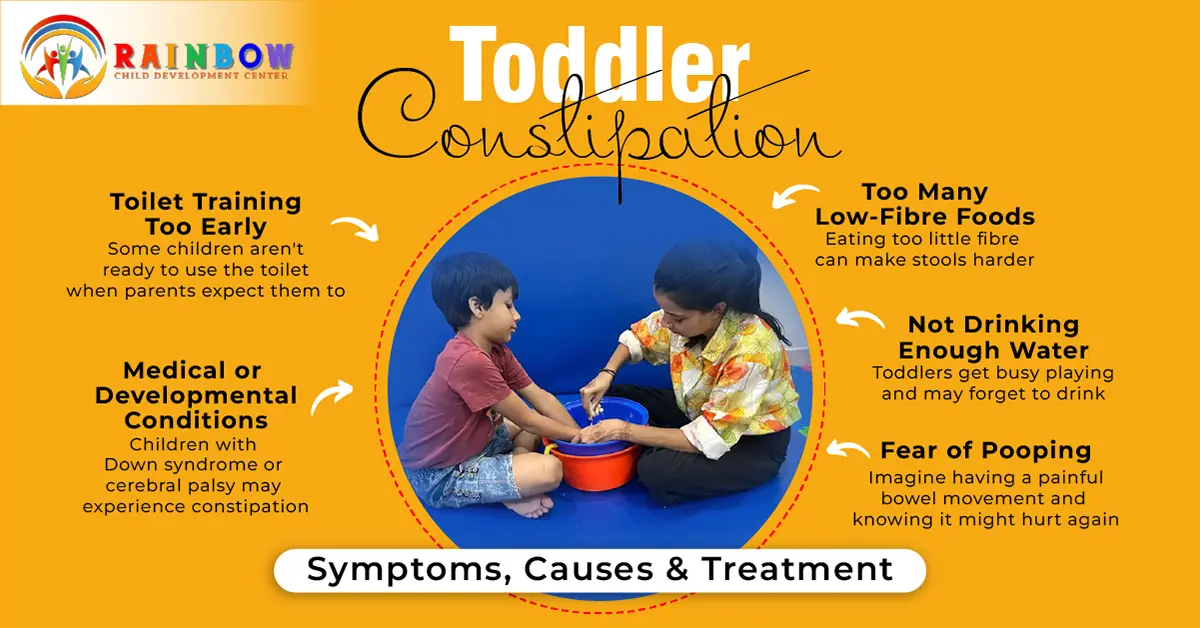
Too Many Low-Fibre Foods
Does your child love biscuits, white bread, or packaged snacks but refuse vegetables? Eating too little fibre can make stools harder.
Try offering pears, papaya, oats, vegetables, and whole wheat foods throughout the week.
Not Drinking Enough Water
Toddlers get busy playing and may forget to drink. When they don't get enough fluids, their stools can become dry and difficult to pass.
Fear of Pooping
Imagine having a painful bowel movement and knowing it might hurt again. That's how some toddlers feel.
They begin holding their poop, which makes the next bowel movement even harder.
Toilet Training Too Early
Some children aren't ready to use the toilet when parents expect them to. Pressure, punishment, or long toilet sessions can make them avoid it.
Medical or Developmental Conditions
Children with Down syndrome or cerebral palsy may experience constipation because of related health problems, medicines, or difficulty moving.
Parents seeking Down Syndrome Therapy or Cerebral Palsy Therapy should discuss bowel concerns with their child's paediatrician.
How to Help Toddler Constipation at Home
You don't need to change everything your child eats overnight. Start with small habits that you can follow every day.
Give fruits with breakfast. Pears, papaya, and prunes can help children get more fibre. Offer age-appropriate portions.
Keep water nearby. Give your toddler opportunities to drink water between meals and during playtime.
Make toilet time comfortable. Ask your child to sit on the toilet after breakfast or dinner. Place a footstool underneath their feet so they don't dangle.
Let them play outdoors. Running, walking, and jumping help children stay active and may support bowel movements.
Don't scold them. If your child refuses the toilet, try again later. A calm approach works better than turning bathroom time into an argument.
Parents often search for how to make toddler poop instantly or 2 year old constipation instant relief.
Can Behavioural or Sensory Difficulties Affect Toilet Habits?
Some children are frightened by flushing sounds, uncomfortable toilet seats, or unfamiliar bathrooms.
Children receiving Sensory Integration Therapy may need extra help becoming comfortable with these experiences.
Children with developmental difficulties can sometimes benefit from toilet routines with Behavior Modification Therapy or ABA Therapy.
A Physiotherapist may help children who struggle with movement or sitting positions.
Other services such as Dyslexia Therapy, Oral Placement Therapy, and Therapy for Speech Sounds Disorder are for different needs. They aren't treatments for constipation.
When Should You Take Your Toddler to a Doctor?
If your toddler hasn't pooped for several days and feels uncomfortable, speak with their paediatrician.
Don't ignore fever, repeated vomiting, blood in the stool, severe stomach pain, or a swollen belly.
Parents also ask, can constipation cause fever in toddlers? Ordinary constipation doesn't usually cause fever. A child experiencing constipation and fever needs medical attention to check for another cause.
Rainbow offers developmental support for children with sensory, behavioral and daily living challenges. If toilet avoidance is linked to these challenges, therapy may support healthier routines alongside treatment from a paediatrician.